#15Q3) Waves and Optics
Determination of the velocity of sound in air using a closed resonance tube and a set of tuning forks and also determination of the end correction of the tube
Required Apparatus
A tube of diameter about 2.5 cm and length about 50 cm, a set of tuning forks of known frequencies, a half metre ruler, a tall jar, and a stand.
Scientific Theory
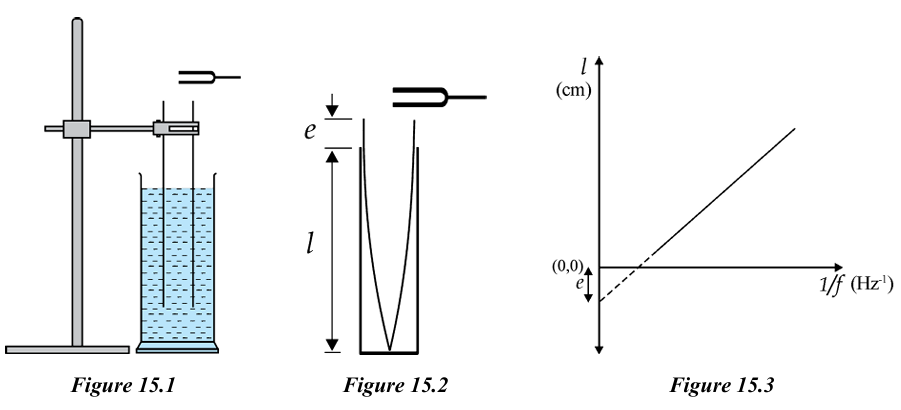
When a closed tube is resonating at the fundamental, let be the wavelength of the wave, the length of the resonating air column and the end correction of the tube. Then
If is the velocity of sound in air and the frequency of the fundamental note,
Gradient of the graph of against
Experimental Method
- As shown in Figure 15.1 immerse the tube vertically in the water contained in the jar leaving a small length of the air column and fix the tube on to the stand.
- Select the tuning fork of highest frequency from the set, vibrate it and hold it just above the open end of the tube. Then raise the tube and the tuning fork together until a louder sound is heard for the first time indicating fundamental resonance.
- Measure the length of the air column above the level of water in the tube and note it along with the frequency of the tuning fork.
- Selecting the other tuning forks in the descending order of frequencies, obtain fundamental resonance length relevant to the frequency of the tuning fork used as done above and after obtaining about five sets of readings record the values.

Important Points
1
- Calculate the velocity of sound in air and also the end correction of the tube from the gradient and the intercept as explained in the theory.
2
- Discuss the deviation of this value with the data book value for the velocity of sound at the existing temperature.